Freeze Frame
COLLABORATION · GRADE 4 · DRAMA
Freeze Frame
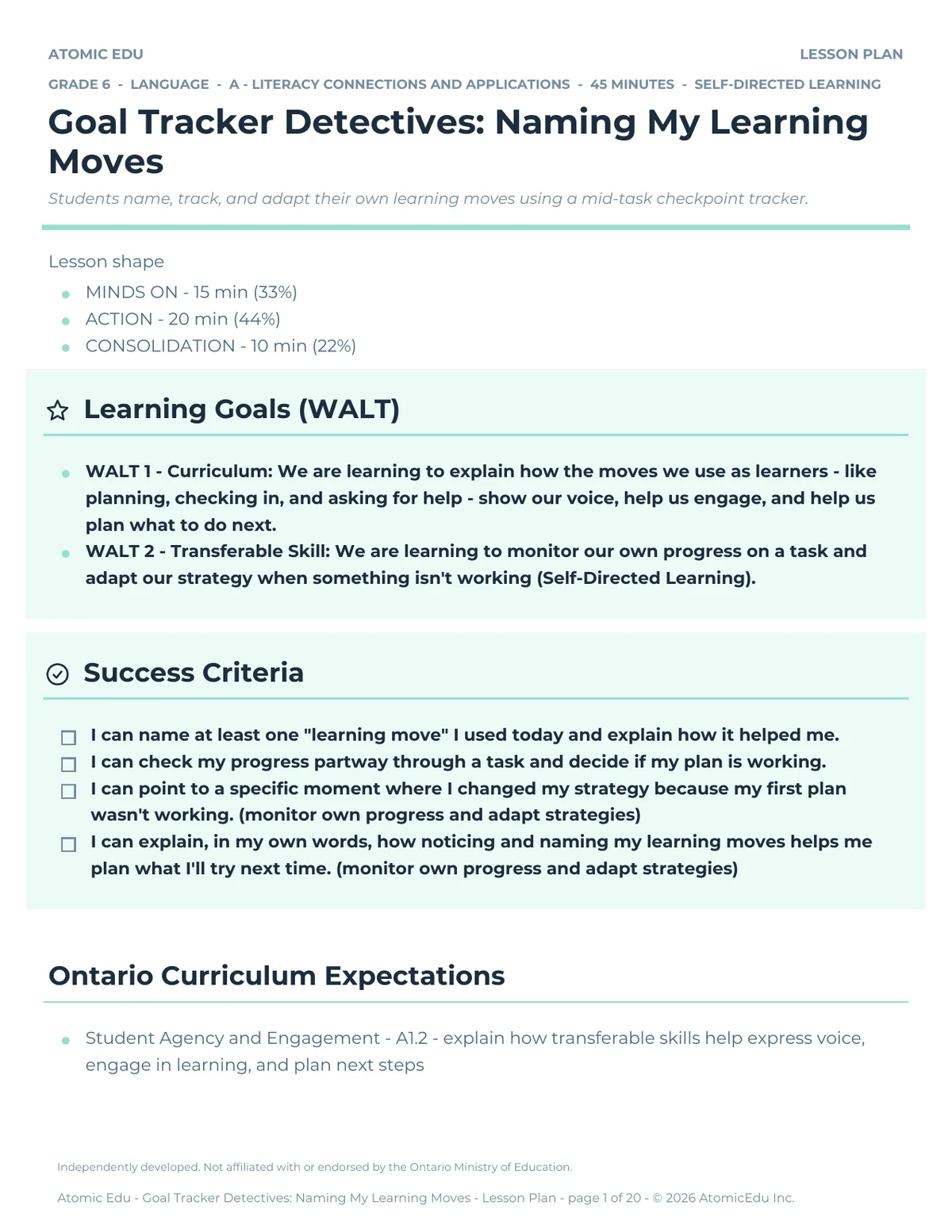
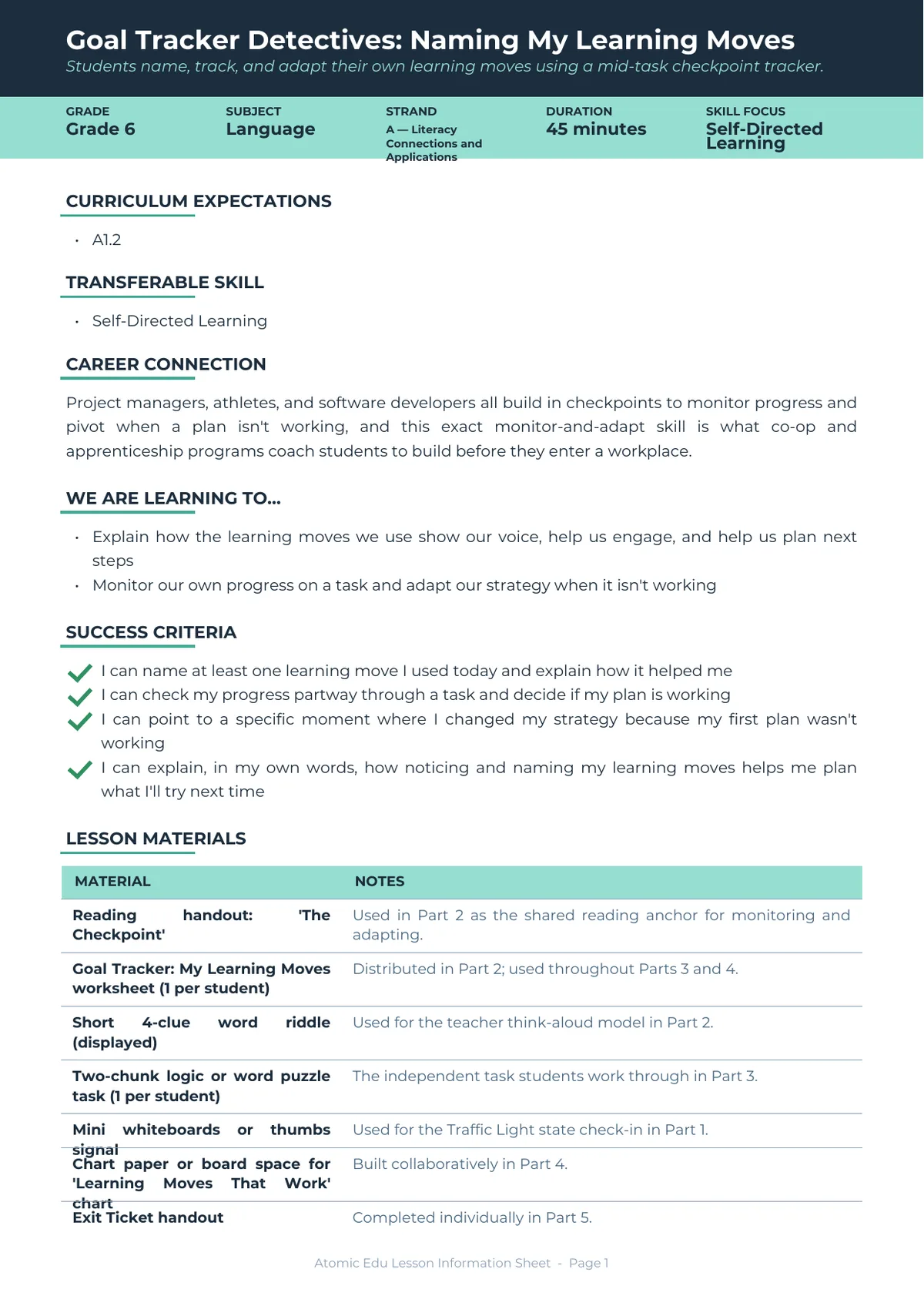
Learning Goals (WALT)
- We are learning to work with a group to communicate an idea without words.
- We are learning to listen and respond to our teammates in the moment (Collaboration).
Success Criteria
- I can take a clear physical position that tells part of the story.
- I can adjust my position based on what my teammates are doing.
- I can stay focused and in character during the freeze.
Career Connection
Collaboration under pressure is what film crews, surgical teams, and emergency responders do every day. When the director calls "cut," everyone adjusts instantly — no argument, no hesitation.
Overview
Students work in groups of four to create a series of frozen dramatic images in response to scenario cards. Each group has 60 seconds to arrange themselves into a freeze that tells a story. The skill is reading your teammates and making a decision together — fast.
Materials
None. A cleared space in the classroom or gymnasium.
Three-Part Lesson
Minds On (10 min)
Teacher calls out an emotion — "surprised," "proud," "disappointed" — and students freeze individually in a pose that shows it. After three rounds, pairs freeze together showing a relationship: "two friends who disagree," "a coach and a player after a loss." Debrief: what made some freezes clearer than others?
Action (25 min)
Groups of four receive a scenario card face-down. On "go," they flip the card, have 60 seconds to plan — no practice run — and then freeze on "freeze." Scenarios include:
- A team that just won something they didn't expect to
- Four people discovering something strange
- A group trying to move something very heavy, very carefully
- People waiting for news they're nervous about
Teacher circulates and calls "freeze" after 60 seconds. Each group holds for 10 seconds while the class reads the image silently. One student from the audience names what they see — not what they think the scenario was, but what the image communicated. After all groups have gone, groups rotate scenarios and repeat once.
Consolidation (10 min)
Whole class debrief. Three questions:
- What did you have to pay attention to in your group to make the freeze work?
- When did you change your plan because of what a teammate did?
- What does that kind of listening look like outside drama class?
Observation Prompts
- Which students take a position and hold it? Which students wait to see what others do first?
- Who adjusts naturally? Who stays committed to their own idea even when it conflicts with the group?
- Flag: students who opt out physically — standing upright while the group freezes — may need a scaffolded role.
Differentiation
- Scaffolded: Provide a visual reference card with sample poses and emotions — reduces the blank-slate freeze.
- Standard: Scenario cards as written.
- Extension: Groups create a three-frame sequence — freeze 1, transition, freeze 2 — showing a change over time.
Exit Ticket
In one sentence: what did your group have to agree on without talking about it?
Report Card Language
- Responsibility (Level 1): Participates when directed; requires prompting to stay engaged with group.
- Responsibility (Level 2): Participates consistently; beginning to adjust responses based on teammates.
- Responsibility (Level 3): Takes an active role; reads the group and adjusts position and energy accordingly.
- Responsibility (Level 4): Leads by example; elevates the group's work through precise, responsive choices.
This is real output — generated by the same engine every Atomic Edu teacher uses.